

Pigeon Crop Control for North West Farms and Landowners
Our pigeon work exists for one reason: to prevent or reduce serious crop damage on land where the problem is real and recurring. We assess first, work to an agreed plan, and tell you honestly what we saw.
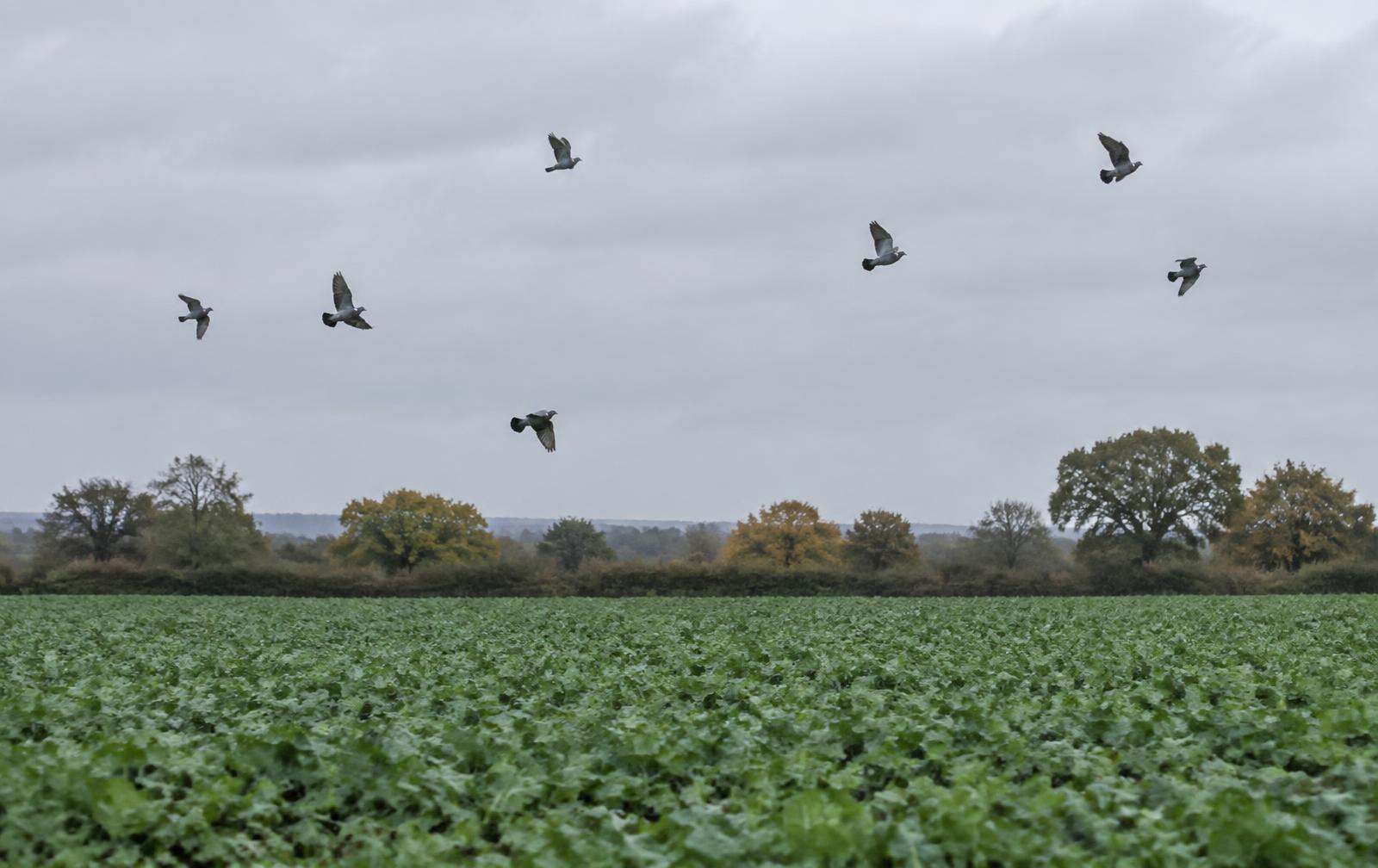
Is persistent pigeon pressure damaging your crops?
Pigeon pressure tends to concentrate at particular points in the farming calendar rather than spreading evenly through it.
Newly drilled and emerging crops are the most exposed: oilseed rape through establishment and again over winter, brassicas and other field vegetables, peas and beans, and young cereals. Damage is rarely uniform. It concentrates where birds prefer to sit, along particular headlands, near cover, and under regular flightlines.
We do not publish figures for what pigeon damage costs, because the honest answer depends on your crop, your ground and the season. What we can do is look at the fields in question, describe what we actually observe, and give you a measured view of whether shooting-based control is likely to help.
What the work involves
- Observation of pigeon numbers and flightlines across the holding
- Identification of the affected fields, crops and growth stages
- Discussion of deterrent measures already in use and how effective they have been
- Safe positioning chosen away from roads, public footpaths, houses and livestock
- Decoying or other appropriate methods, matched to the site
- Repeat attendance where it is justified and agreed with you
- Feedback to the farmer or land manager after every visit
- Cartridges, equipment and other waste removed from the site
Lawful purpose comes first
All bird control is undertaken only where there is a lawful purpose, with the appropriate landowner or occupier authority, and in accordance with the conditions of the applicable general or individual licence.
That means the presence of woodpigeons is not, by itself, a reason to shoot. There has to be a genuine purpose recognised by the relevant licence, non-lethal measures have to be considered, and the licence conditions apply to every visit. Where a site does not meet those conditions, we will say so.
Current licence guidance on GOV.UK (opens in a new tab)
Tell us where the problem is
Send us a few details about your land, the species involved and the damage you are seeing. We will contact you to discuss whether we can help.
Request a Site Assessment